



Two vacuums, two very different jobs. A robot vacuum runs while you're at work. A cordless stick vacuum waits in the closet for the moment a cereal bowl meets the rug. Most households that own both will tell you they use them for completely different tasks — and most people choosing between them are really asking which one will actually get used. The answer depends less on suction specs than on your floors, your pets, your storage, and how much maintenance you're willing to do.
Start With the Job, Not the Spec Sheet
A robot vacuum is a maintenance tool. Its value comes from frequency: it can run daily, unattended, slipping under beds and sofas and pulling up the fine dust that builds between real cleanings. You don't steer it; you schedule it.
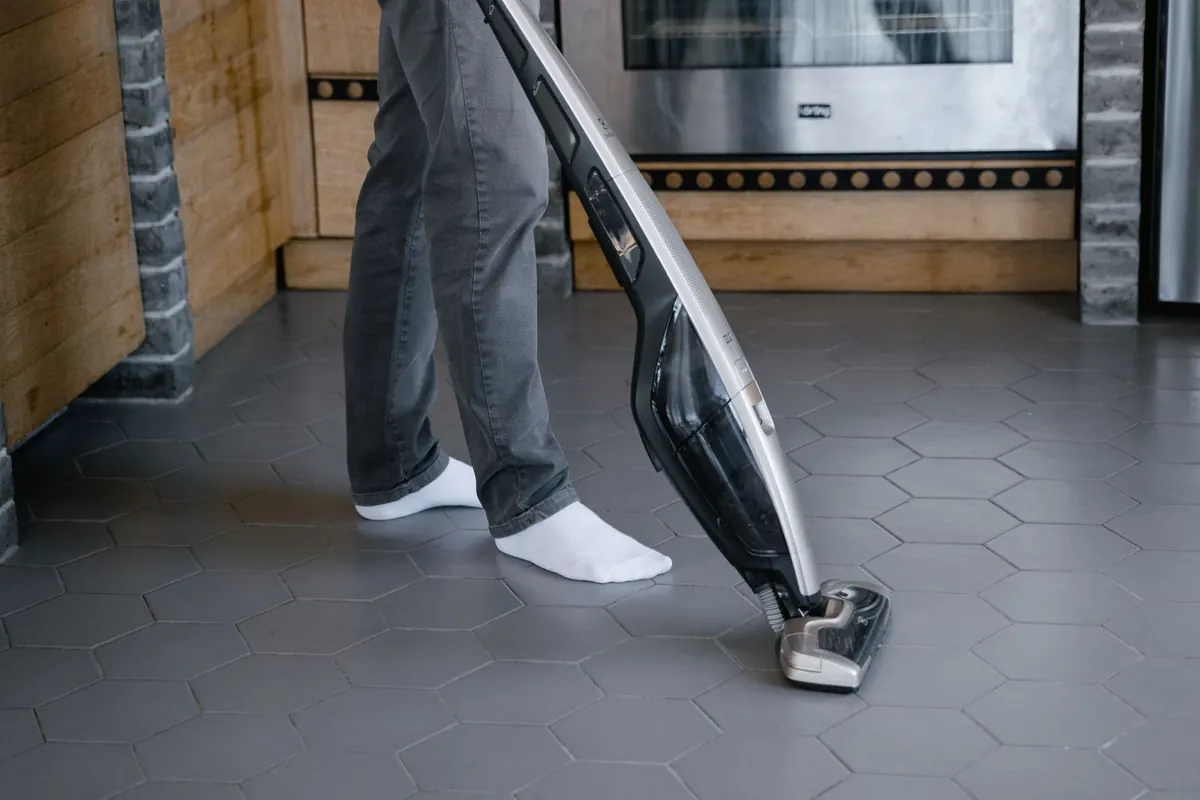
A cordless stick vacuum is a task tool. You grab it for the five-minute spill, the stairs, the sofa cushions, the car footwells, and the weekly pass over a carpet. It goes exactly where you point it, and it reaches places a robot can't.
So the real question is simple: do you want fewer cleanings overall, or better cleanings when you do them?
Cleaning Power: Where the Gap Shows
On bare floors, both machines do well. On carpet, the difference widens. A cordless stick typically delivers stronger airflow and more aggressive brushroll agitation, and — this matters more than any number on the box — you can overlap passes, slow down over a stubborn patch, and go over the same square foot three times. That's how carpets actually get clean.
A robot covers each spot once at its own pace. Many handle low-pile carpet fine, but thick pile, deep grit, and crushed traffic lanes usually need a human-driven pass.
Robots also have honest limits. They struggle with:
- Charging cables and cords left on the floor
- Fringe and tassels on rugs
- High thresholds and thick shag
- Stairs, entirely
- Clutter that blocks their path or tangles their brushes
None of that makes them weak. It makes them a different category of tool.
Pet Hair, Honestly
Pet hair often settles the decision on its own. Loose hair on hard floors is a robot's best case — run it daily and you'll be surprised how much it collects before you notice.
Hair embedded in carpet and upholstery is a stick vacuum's job. Look for a rubber or combination brushroll; all-bristle brushes tend to wrap hair and need regular cutting. A stick also wins on couch cushions, cat trees, stair treads, and car seats, especially with a crevice or upholstery tool attached.
If you have a heavy shedder and room in the budget for two machines, the ideal setup is a robot with a self-emptying dock running daily, plus a stick for furniture, stairs, and the deep weekly pass. If you're buying only one and pets rule the house, the stick usually earns its keep first — unless you know you won't vacuum by hand more than once a week, in which case the robot does more good simply by running.
Floors, Room by Room
Apartments and studios
Mostly hard floor, low clutter, limited storage. A robot shines here and the dock fits under a console or beside a sofa. If your place is small enough that one outlet reaches everything, the robot will cover the whole apartment on a single schedule.
Wall-to-wall carpet
Go with the cordless stick, ideally with a powered brushroll and a decent battery. Add a robot later for daily surface debris if you want, but don't expect it to replace the deep pass.
Mixed floors with pets
This is the two-machine household. Let the robot handle open living areas daily; keep the stick for the bathroom, the stairs, the entryway, and the rug that sheds. If you must pick one, count how often you actually vacuum now — the robot wins on consistency, the stick wins on results.
Maintenance Nobody Warns You About
Both machines need care, and a robot needs more of it than the marketing suggests. Hair wraps around brushrolls, sensors get dusty, wheels collect hair, and dock contacts stop charging cleanly. Floors also need picking up before a robot run — socks, pet toys, and loose cables cause most stuck-robot mornings.
A stick is simpler: empty the bin after most uses, rinse or tap out the filter as the manual allows, and cut hair off the brushroll every few weeks. Battery capacity fades over years of use, so check that a replacement battery is available for the model you're considering.
A workable routine:
- Weekly: empty bins, clear visible hair from brushrolls, wipe the robot's sensors.
- Monthly: wash or tap out filters, check the dock contacts and charging pins.
- Every few months: inspect brushes, wheels, and belts; replace anything worn.
Self-emptying docks cut the daily emptying chore, but they add bag or bin maintenance and take up noticeably more floor space.
Storage, Space, and Small Apartments
Storage is where the stick quietly wins in apartments. It weighs a few pounds, hangs on a wall mount or tucks beside the fridge, and takes about ten seconds to deploy. A robot needs a dock on the floor near an outlet, ideally with clearance on both sides, and self-emptying docks are considerably larger. In a studio, that dock can end up being the biggest object on your floor plan.
The counterpoint: a robot occupies floor space but none of your time. If you're out most days and your apartment is mostly hard floor, it's often the better fit — and the dock is easy to hide.
If starting a cleaning session means moving three things out of the way, you'll do it less often than you planned.
How to Decide
Work through this in order, and the answer usually shows up fast:
- If your home is mostly bare floor, low on clutter, and you want to stop thinking about vacuuming, buy the robot.
- If you have pets, carpet, stairs, or a car you care about, buy the cordless stick first.
- If you're genuinely unsure, borrow or try one for a week. Robots either fit your habits or they don't, and that's clear within days.
Whichever you choose, check before buying that filters, brushrolls, and batteries are easy to find for that model. A vacuum you can keep running for years beats a slightly better one you can't maintain.
Photo: MART PRODUCTION / Pexels