



Two weeks in Portugal, three flights, one stubbornly small carry-on. Somewhere over the Atlantic the question stops being philosophical: do you bring the e-reader, or the stack of paperbacks you have been saving for this trip? The honest answer depends less on which one you love and more on how you travel — how long, how light, how often you move, and what kind of reading you actually do when you are tired and half-lost in a new city.
The Weight Question Is Really a Space Question
A typical paperback weighs somewhere in the neighborhood of 200 to 400 grams. Hardcovers run heavier. An e-reader lands in a similar range, roughly 150 to 250 grams, plus a case that adds a little more.
So a single paperback and a single e-reader are close enough that weight alone settles nothing. The math changes the moment you plan to read more than one book. Four paperbacks is a kilogram you are carrying through train stations, up hostel stairs, and onto buses with no luggage racks. Eight books is a decision you will feel in your shoulder by day four. One e-reader holding thirty books weighs exactly the same as one e-reader holding three.
But there is a catch people forget: an e-reader is a device. It needs a cable, it needs charging, and it needs to be kept dry and out of the sand. A paperback needs none of that. On a three-day weekend trip, a single paperback takes up less room in a day bag than a device plus its charger.
Battery Life: Weeks, Not Hours — With Conditions
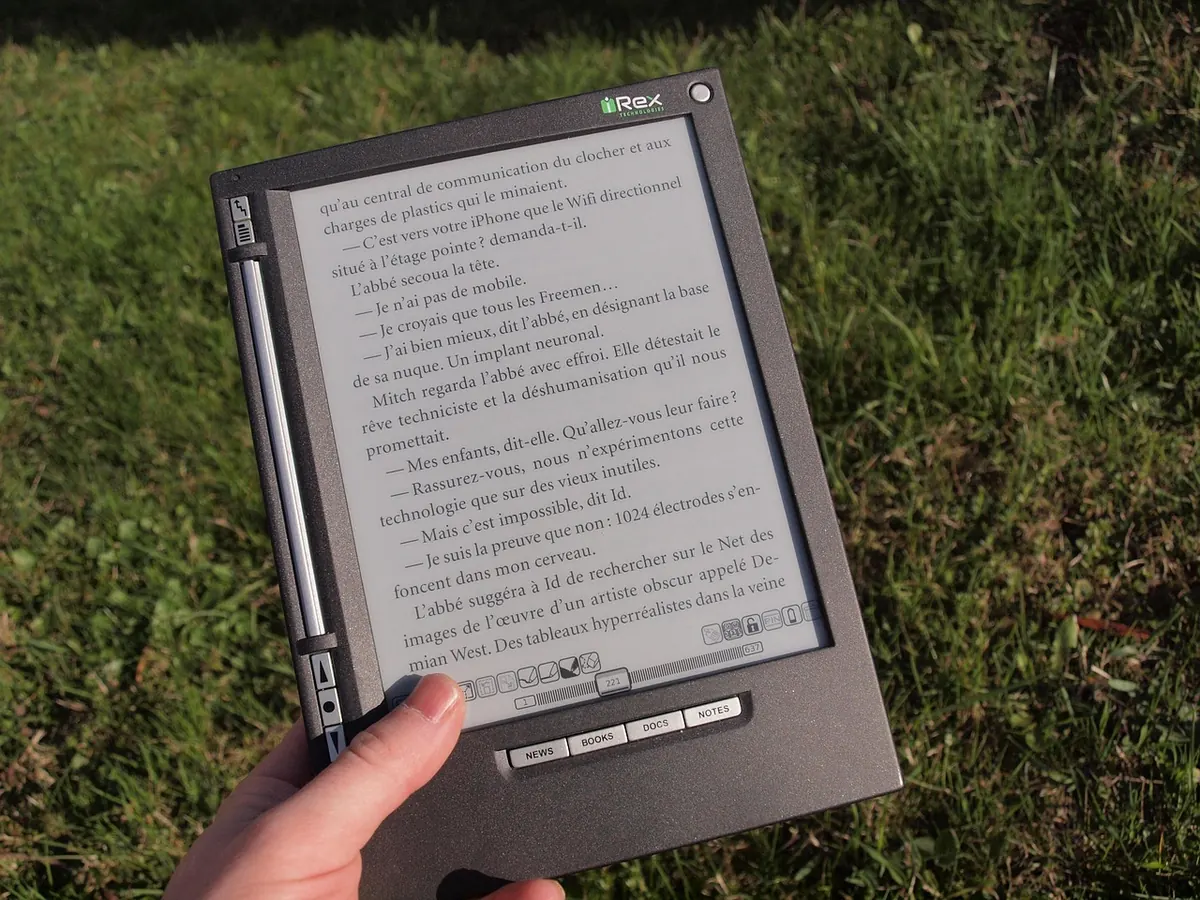
E-ink screens are the reason e-readers last so long. They draw power when the page changes, not while you stare at a page, which is why a reader can often go a week or more between charges. That advantage shrinks fast if you leave Wi-Fi on, crank the front light, or leave the device sitting in sleep mode with a cover that keeps waking the screen.
Devices that are not dedicated e-readers are a different story. Phones and tablets running reading apps typically need charging daily on a heavy reading trip, and they drain faster in cold weather and in airplane mode off. If you plan to read on a phone, plan to travel with a power bank and to fight for the one outlet near the gate.
Practical habits that keep an e-reader alive on a long trip:
- Turn on airplane mode the moment you finish downloading your books.
- Lower the front light and use the warm setting in the evening rather than at full brightness.
- Match your cable to your device before you leave; mixing USB-C and micro-USB is a classic airport annoyance.
- Charge whenever you have a reliable outlet, not when the battery warning appears.
Eyestrain and Reading Comfort
E-ink is reflective and matte, which means it behaves like paper in bright sun: no glare, no washed-out screen, no hunting for shade on a beach. A front light illuminates the page from the side rather than shining into your eyes, and most readers let you warm the color temperature for night reading. For long sessions, most people find it easier on the eyes than a backlit tablet.
Paper still has one advantage nothing quite replicates: it never changes brightness, never flashes on a page turn, and never nudges you with a notification. If you are prone to distraction, that matters more than any specification.
The real eyestrain culprit on a nine-hour flight is usually not the screen at all. It is dry cabin air, small fonts, and not blinking enough. Bump the font size up a notch or two, look at something distant every twenty minutes or so, and keep water nearby. If you get persistent headaches, blurry vision, or eye pain while reading, see an eye doctor rather than experimenting with settings.
Library Access on the Road
This is where e-readers quietly win, but with fine print. Many public libraries lend ebooks through apps such as Libby or OverDrive, and a library card you already have at home usually keeps working while you travel. Loans expire on their own, so you never owe a late fee or carry a return date in your head. Some libraries also offer nonresident cards for a fee, and availability of specific titles varies a lot between library systems and countries, so check before you leave rather than at a hostel at midnight.
Buying is easy too. If you finish a book in a small town with no English-language bookshop, you can have the next one in a minute. That convenience is hard to overstate on a long trip, and it is the main reason many travelers switch permanently.
Physical books win in a different economy: the swap. Hostels, guesthouses, cafés, and used bookshops run informal exchanges all over the world. You finish a novel, leave it behind, and pick up something you would never have chosen. You also lighten your bag with every book finished, which is a small pleasure an e-reader can never give you.
Where Paper Still Wins
- Beach and boat days. Some e-readers are waterproof, but sand, salt, and a cracked screen are expensive. A cheap paperback is not.
- Trips with unreliable power. Multi-day treks, camping, and long bus rides without outlets favor paper.
- Books you want to leave behind. Finished paperbacks become gifts, swaps, or hostel library donations.
- Notes and marginalia. If you underline, dog-ear, and argue in the margins, paper is still the better tool.
- Souvenirs. A book bought in a shop in Lisbon or Tokyo carries a memory; a download does not.
A Packing Plan You Can Use
- Count reading days, not books. Estimate how many hours you will genuinely read, then halve it. Travelers overestimate free time almost every trip.
- Match the device to the trip. Under a week, or a beach-focused trip, paper is simpler. A week or more with multiple flights favors an e-reader.
- Go hybrid if you are unsure. E-reader plus one paperback covers almost every scenario and weighs less than three books.
- Download before you leave. Load three or four titles you are excited about, plus one backup you would read in an emergency.
- Pack the accessories. Cable, a small power bank, and a sleeve or case. A dry bag costs almost nothing and saves the device on a rainy day.
- Set up library loans early. Holds and lending windows move slowly, and you do not want to discover a waitlist at the airport.
The Short Answer
If your trip is long, involves multiple flights, or you read more than a book a week, take an e-reader and one paperback you do not mind abandoning. If your trip is short, powered, and mostly outdoors, take paper and enjoy not thinking about batteries. Either way, download or buy your first book before you leave, keep the charger where you can find it, and leave a little room in your bag — you will almost certainly come home with one more book than you packed.
Photo: janeb13 / Pixabay