



The moment you most need a camp stove is rarely the moment it works best. It's the grey morning when your hands are cold, the water is finally steaming, and the canister starts to sputter because the temperature dropped overnight. Choosing a stove is really choosing a set of trade-offs: how fast it boils, how it behaves in the cold, how easy the fuel is to find, and how much fiddling you'll tolerate at 6 a.m.
Three families cover almost everything a first-time camper will encounter: canister, liquid fuel, and wood.
Start With How You'll Cook, Not the Specs
Manufacturers love boil times measured in a warm lab. Your trip will look different. Answer these three questions honestly before you compare anything.
- Are you boiling water or actually cooking? Dehydrated meals and coffee are forgiving. Simmering rice, frying fish, or melting snow for a group demands more control and far more fuel.
- How cold and how high? A stove that's cheerful at 60°F can be miserable at 20°F. Canister stoves lose pressure as the can chills; liquid fuel stoves don't care.
- How far from the car? Canisters are heavy in multiples and can't be topped up. A fuel bottle lets you carry exactly what you need.
There's a fourth question too: where you're camping. Some parks and wilderness areas restrict open fires, and in many of them a twig stove counts as a fire. Check the rules before you plan a trip around one.
Canister Stoves: The Easy Default
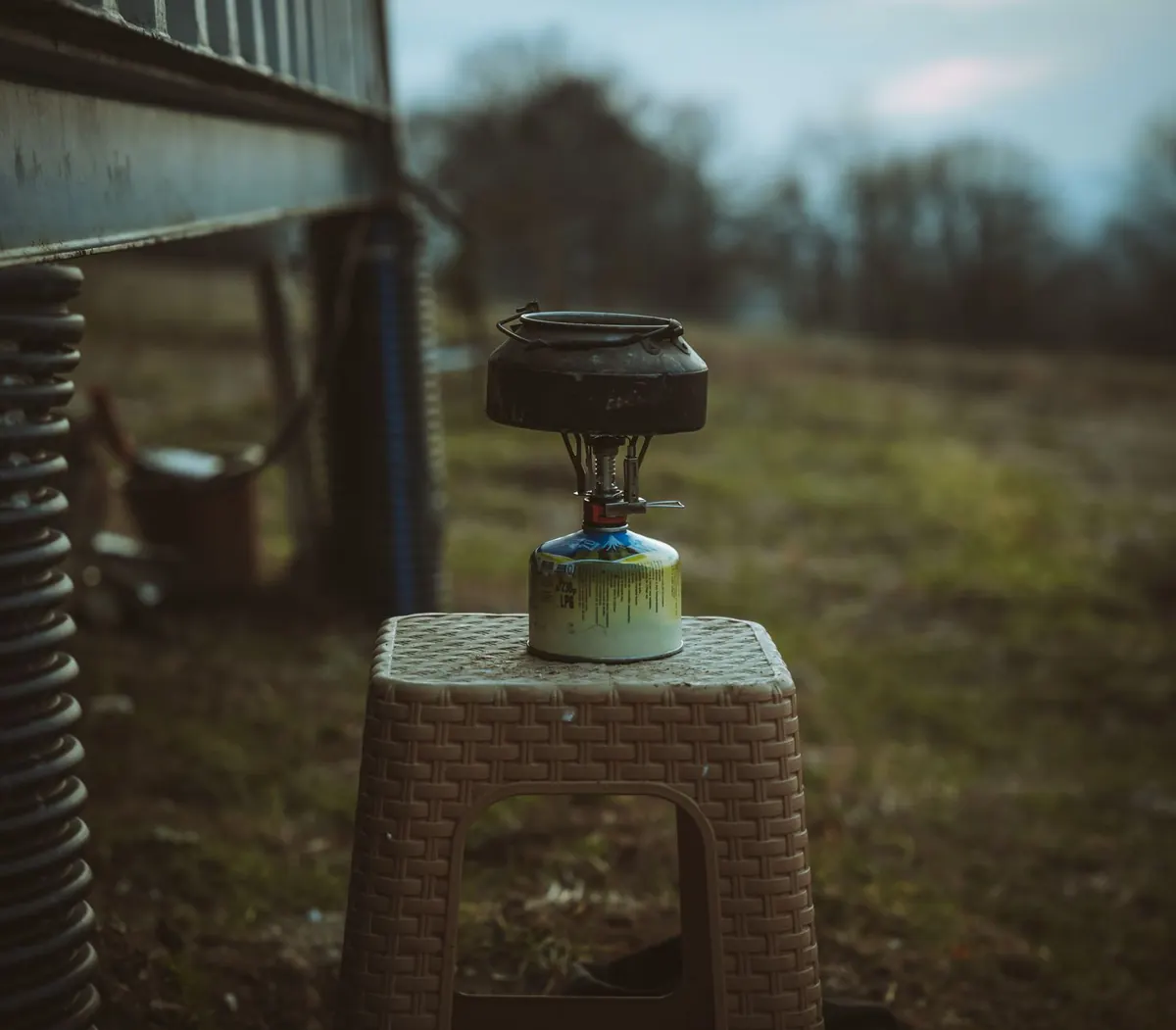
A canister stove screws onto a pressurized can of butane, isobutane, or a blend. Turn the valve, hit the igniter, and you're cooking in seconds. This is the right first stove for most people, and plenty of experienced campers never switch.
Where they shine
They're light, they start instantly, better models simmer well, and the fuel is sold in nearly every outdoors shop. No priming, no pumping, no generator tube to clean. If your trips are three-season and your dinners are boil-and-add-water, a canister stove is the least annoying option you can buy.
Where they struggle
Cold is the weak point. As a canister chills, the liquid inside stops turning into gas and the flame shrinks to a sad yellow ring. Butane gives up first, isobutane holds out longer, and propane keeps going well below freezing, which is why winter blends carry more propane. Canisters are also awkward to recycle, and you can't tell how much is left without shaking or weighing them.
Liquid Fuel Stoves: The Cold-Weather Workhorse
Liquid fuel stoves run on white gas, kerosene, or diesel, and multi-fuel versions burn several. They're heavier and louder, and they demand a ritual: pump the bottle to pressurize it, crack the valve, light a small priming flame to heat the generator, then open it fully once the burner roars.
The payoff is reliability. Because you supply the pressure yourself, the stove doesn't care whether it's 10°F or whether you're above the treeline. Fuel is cheap in bulk and easy to buy in larger quantities, which matters on long trips. Learn the priming routine at home on a stable surface before you depend on it in the dark. Twice is usually enough to make it feel natural.
Wood and Alcohol: Simple, Cheap, Fussy
Twig and rocket stoves burn small sticks, pinecones, and pellets. They cost little, need no fuel carried in, and are quietly satisfying to use. They also smoke, soot your pot, need constant feeding, and perform badly in rain or with damp wood.
Alcohol stoves sit at the other extreme: silent, tiny, and fueled by denatured alcohol from a hardware store. They're slow, hard to simmer on, and weak in the cold because the alcohol needs to warm before it vaporizes. Fine for a solo hiker boiling water on a mild evening; frustrating when four hungry people are waiting.
Cold-Weather Performance
If you camp in shoulder-season or winter conditions, plan around fuel behavior rather than marketing claims.
- Pick canisters labeled as winter or high-altitude blends, which contain more propane and isobutane.
- Sleep with your canister inside your bag so it starts the morning warm. Close the valve and check it for leaks first.
- If your stove allows it, use a remote canister with a preheat loop and invert the canister so liquid fuel feeds the burner.
- Start with water you kept from freezing. Melting ice from scratch burns a startling amount of fuel.
- Always use a lid and a windscreen, but never wrap the screen around the canister itself. Trapping heat there is dangerous.
Safety Basics You Shouldn't Skip
Stoves are simple machines, and nearly every accident traces back to a handful of predictable mistakes.
- Never burn a stove inside a tent or a sealed vestibule. Carbon monoxide is invisible, odorless, and lethal. Cook outside, or in a well-ventilated space meant for it.
- Set up on a flat, stable, non-flammable surface and clear dry grass, pine needles, and paper from around it.
- Check liquid fuel connections with soapy water. On canisters, smell and listen for leaks, and replace O-rings that look cracked.
- Let a stove cool completely before refueling or swapping a canister, and do it well away from any flame.
- Never leave a lit stove unattended, and turn pot handles inward so nobody knocks them over.
- Store fuel in approved containers, out of the sun and out of a hot vehicle. Follow local fire rules, especially in dry regions.
A Simple Way to Choose
Buying your first stove for weekend car camping and three-season backpacking? Get a canister stove with an igniter and a pot that nests with it. It will handle almost everything you do for years.
Already know you'll be out below freezing, above the treeline, or melting snow for days? Go straight to a liquid fuel stove, and practice the priming routine before the trip rather than during it.
Want the cheapest setup, don't mind blackened pots, and camp where fires are allowed? A twig stove is genuinely fun, and a small alcohol stove makes a sensible backup.
Whichever you pick, test it in the backyard first. Boil a pot, time it, and pack it away. The morning you actually need coffee is not the morning to read the instructions.
Photo: seyfi durmaz / Pexels